

Passive Compliance within the Waste Industry
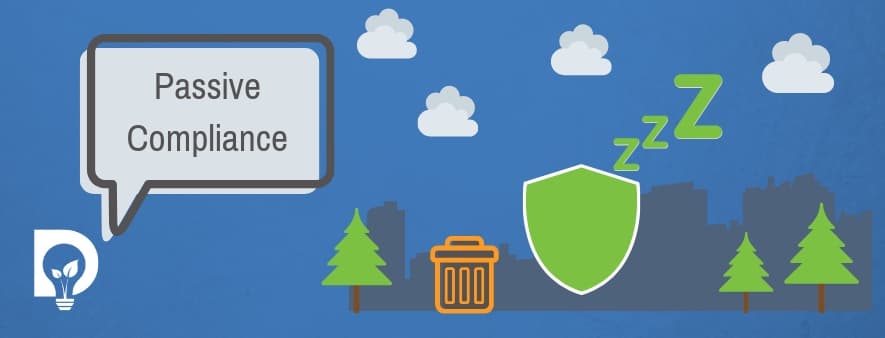
Passive compliance is an idea that we have been batting around the office for quite a long time. It is the concept that, when dealing with rubbish or waste, the normal standard option should be the right one. If we need to get rid of an item, either by recycling it or by throwing it away, then the easy choice for us, as waste producers, should be the most compliant one.
When talking about passive compliance and its relevance, the current situation needs to be examined. Right now, when you are looking to get rid of some rubbish, there are steps you need to complete. We have written about these in How to do rubbish removal the right way, but the basics are:
- Get the name and address of the company
- Check that they have a valid waste carrier's licence
- Ask where the rubbish is going
- Get a signed invoice, receipt, and/or transfer note
These are all things we must do to follow our duty of care. If you do not follow them and something goes wrong, for example the waste gets fly-tipped or ends up at an illegal waste site, then we, as the waste producer, are responsible. Here at Dsposal we call this active compliance. When we get rid of waste, we must do work to follow the rules.
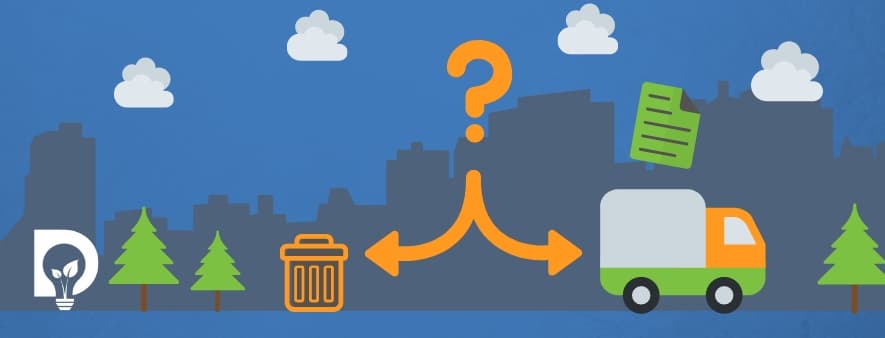
To some extent this makes perfect sense and fits with the regulation around duty of care. However, this is not the default option when we, as citizens, get rid of our rubbish. For decades we have been instructed to leave waste out for the bin men. Quite literally we have been told to throw it away, and at no point during that process were we expected to engage with it. Even before councils collected waste, refuse was left for rag-and-bone men like the affable Steptoe and Son, collecting junk every day.
This creates an interesting situation and breeds confusion. As waste producers, we are responsible for our waste. However, if the situation is x then we follow the default option and passively comply because of our householder status, but if y then we are directed to follow the law and meet our duty of care. If we fail in our duties, then non-compliance penalties are introduced and enforced.
Let us revisit those four steps from before and adapt them slightly to fit a general scenario for any service:
- Get the name and address of the service provider
- Check that they are licensed to provide the service
- Ask what happens next concerning the product or service
- Get signed paperwork
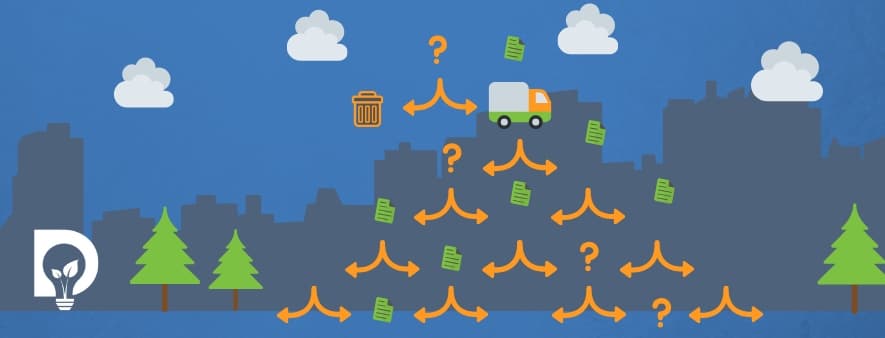
Most of these steps are like any other interaction with a service provider as a member of the public. By law, all gas engineers must be on the Gas Safe Register. Taxi drivers must be licensed. However, there is no branch in these processes. If a gas engineer does work on a boiler they must provide paperwork, and taxi drivers display a licence and carry visible livery showing that they are permitted. Waste has this branching condition. If the scenario is this, then do that; otherwise do that. This creates an if this then that relationship between active participation and passive involvement.
These branching cases require instruction to navigate, and complexity is baked into the system. The further down the branches we go, the more questions are asked, the more ifs, the more branches, and critically the more activity. To create a situation where we, the waste producer, are not in breach of the law requires effort, engagement, and education.
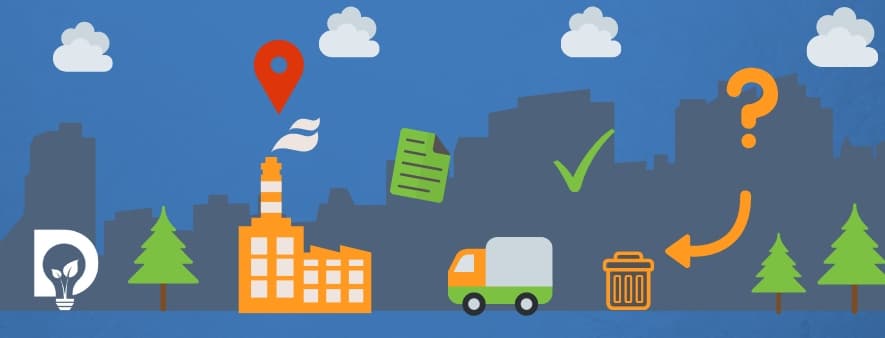
There is effort involved in becoming compliant. That is what we are calling active compliance. And, as mentioned earlier, it makes sense. It is our waste, so we should know what it is, who is taking it away, and what happens to it. And we do care about this. Waste has not left the news since Blue Planet II first aired in late 2017. We do care, until we have to deal with it directly. Until we have to put effort into dealing with it. Then we revert to the expected norm, the option that relies on a rag-and-bone man.
This expected norm, the default position, needs to change. This is where passive compliance needs to operate. Dsposal's aim is to maximise the utility of waste via easy-to-use ubiquitous technology, making relevant data accessible and useful to all waste producers everywhere in order to drive behaviour change and create value. Those ever-branching if statements are bread and butter for technology. The framework to digitise the process already exists. In some respects, that is the easy part.
The hard part is developing and building an environment-promoting societal context where duty of care and compliant behaviour are the norm, and where a holistic approach is taken to ensure this is promoted by everybody that interacts with waste. The complexity is how to marry the current situation of using kerbside collection or HWRCs passively with the need to use other organisations actively.
At Dsposal we have been building our technology, ideas, and learning around four pillars:
- Know: gather all the data and information needed to provide knowledge and insight on the industry
- Interact: allow everybody to interact with the information collected and, at the point of decision-making, highlight the sustainable consequences of choice
- Transact: facilitate transactions through the waste pathways
- Reward: reward behaviours that keep resources in their highest-value states and create social and institutional environments that encourage reuse
We released these concepts for the GovTech Catalyst Smart Waste Tracking competition in March 2019. But how do we promote a situation where duty of care is the norm and is achieved passively?
The first step towards holistic passive compliance is openness of the data and information that already exists, together with mapping local authority activities to the duty of care framework. Let us reframe the four basic duty of care steps for local authorities:
Get the name and address of the service provider
Provide the name and address of the contractor collecting bin waste from homes and operating household waste recycling centres.
Check that they are licensed to provide the service
Make licences and permits available and help the public understand these documents.
Ask what happens next concerning the product or service
Release the data and information regarding the waste pathway to the public. Withhold nothing about the final disposal or recovery location and help with interpretation of the data.
Get signed paperwork
This one is a little impracticable for local authorities because collections are carried out on rounds. But three out of four is not bad.
There is variety and diversity in household waste collections. Decades of decisions made it that way, but what we need is consistency, not uniformity. Consistency in expectation. The norm of simply throwing waste away needs to change. The new norm needs to understand who is picking up waste, where it goes, and confirmation that it got there. But this needs to happen passively.
What do you think? Why not contact us and let us know your thoughts.