

What are waste management platforms?
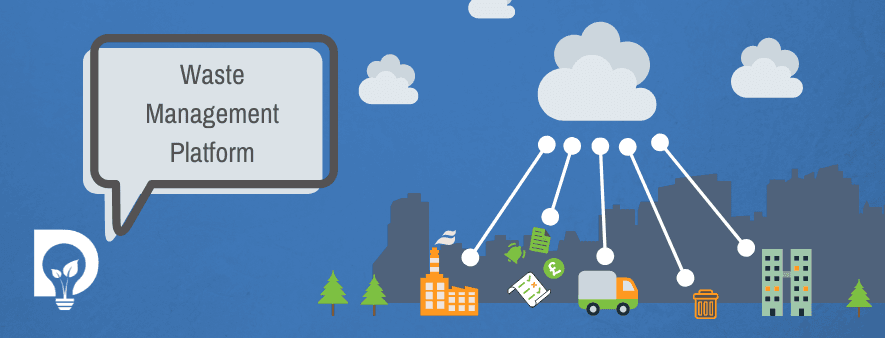
Waste management platforms come in all different shapes and sizes. Some focus on specific areas of the industry, while others claim to provide everything. Some require you to own a dedicated server. Some are apps. Some are SaaS. In this article, we will walk through the options and do some jargon-busting along the way.
What is a Waste Management Platform?
Waste management platforms are software that organisations use to manage day-to-day waste management activities such as quoting, job management, customer relationships, compliance, and supply chain operations.
Waste management platforms streamline the process of managing waste and allow data to flow seamlessly between different departments. By collecting an organisation's full transactional data across the whole pipeline, from opportunity all the way to invoice, waste management software stops data from being duplicated and provides a single source of reference.
As the waste industry moves towards digital waste tracking, having the right waste management platform could save your business both time and money.
Learn moreThe Business Value of Waste Management Software
Online software is indispensable in today's business world. By storing data and processes together in online waste management platforms, businesses can align separate departments and improve workflows, resulting in significant cost savings. There are additional benefits, such as:
- Improved business insight from real-time information generated by reports
- Lower operational costs through streamlined business processes and best practices
- Enhanced collaboration from users sharing data in sales documents, technical analysis, and purchase orders
- Improved efficiency through a common user experience across many business functions and well-defined business processes
- Consistent infrastructure from the back office to the front office, with all business activities having the same look and feel
- Higher user-adoption rates from a common user experience and design
- Reduced risk through improved data integrity and financial controls
- Lower management and operational costs through uniform and integrated systems
Waste Management Platform Fundamentals
Waste management platforms are designed around a single, defined data structure, or schema, that typically uses a common database. This helps ensure that the information used across the business is standardised and based on common terms. These core constructs are then interconnected with business processes driven by workflows across departments such as sales, technical, operations, and finance. Simply put, waste management software connects people, processes, and technologies across a modern waste company.
For example, consider a total waste management company that delivers skips to a constantly changing customer list, empties interceptors on an ad hoc basis, and collects 1100ltr bins on a schedule. It could use a waste management platform to track the quotes, purchase order numbers, customers, and assets to ensure that each step across the entire job management process uses uniform and clean data. This data is also connected to internal workflows, business processes, reporting, and analytics.
Using this type of software means that a collection, for example 4yrd general waste skip, is uniformly identified by container type, size, waste description, asset number, customer account number, job number, cost, and specification.
Waste management platforms also ensure that these data fields and attributes feed into the correct place in the company's accounts so that all information relating to a collection is properly tracked. If the 4yrd general waste skip were called mini general waste in one software system, 4 yard general waste in another, and 4 yarder GW in a third, it would be difficult for the company to work out how many jobs each year are completed for that service and whether it should increase marketing or adjust the price.
A key component of waste management platforms is the central collection of data for wide distribution. Instead of several standalone databases with an endless inventory of disconnected spreadsheets, waste management platforms bring order to chaos so that all users, from the managing director to the customer service team, are working with the same data. Everyone using this data can be confident that it is up to date and complete because it feeds directly from one system of record. Data integrity is protected for every task performed throughout the business, from a quarterly financial statement to a single outstanding jobs report, without relying on spreadsheets.
Waste Management Platform Types
Waste management platforms come in many shapes and sizes. They can be small, highly engineered mobile apps that allow a waste management company to manage collections along a specific route. Or they can be large, complex desktop programs that require an on-premises server and different licences depending on the features required.
Waste management platforms have been around for decades, and their adoption has grown rapidly in waste companies. At the same time, the cost of implementing such software started to climb. Large machines kept on site in company server rooms were needed to run the software, and licences for these systems often depreciated over five to ten years. In addition, the customisation needed for the specific requirements of a business added further cost.
With the advent of the internet, waste management companies found that their on-site software platforms could no longer keep up with modern security requirements or the increase in use of smartphones and tablets. Online waste management platforms also introduced new features and utilities, such as embedded analytics.
Cloud-Based Waste Management Platforms
Cloud-based waste management platforms, and especially software-as-a-service models, offer the most up-to-date features. Software hosted in the cloud is not stored inside the waste management company's server room, but on a network of remote servers.
This means updates can be implemented instantly for the user, rather than through an expensive upgrade of on-site systems every five to ten years. Accessing a waste management platform through the cloud can reduce both operational expenditure and capital expenditure because it removes the need to purchase software and hardware or hire extra IT staff. This frees up finances to be invested back into the business, with the added benefit that the business is always using the latest version of the software. Employees can shift their focus from managing IT to more value-added tasks such as innovation and growth.
Get Started with Dsposal's Paperwork
Dsposal's Paperwork is a modern, software-as-a-service waste management platform that provides the features and benefits described above. Using a cloud-based platform means waste management companies can improve their business practices quickly as the software develops.
Processes that were previously paper-based or spreadsheet-based and labour-intensive can be automated, freeing up employees' time. In addition, it is not only office-based users who benefit from the software, but also those on the road, in transfer stations, and elsewhere across the business. A comprehensive, real-time understanding of business activities is available to the right employees on mobile devices, including smartphones and tablets.
Built for the digital age, Paperwork, Dsposal's cloud waste management platform, embraces mobile, social, analytics, and the latest emerging technologies. Bringing all of these together allows businesses to keep innovating and moving forwards.
Paperwork
Designed and built for SME waste companies, with SME waste companies, Paperwork is Dsposal's complete waste management software.
Streamline your business operations from opportunities through to invoicing to increase productivity and profitability.
Learn more